
Making new dead friends
Archival romance in Byatt and Mantel and also real life
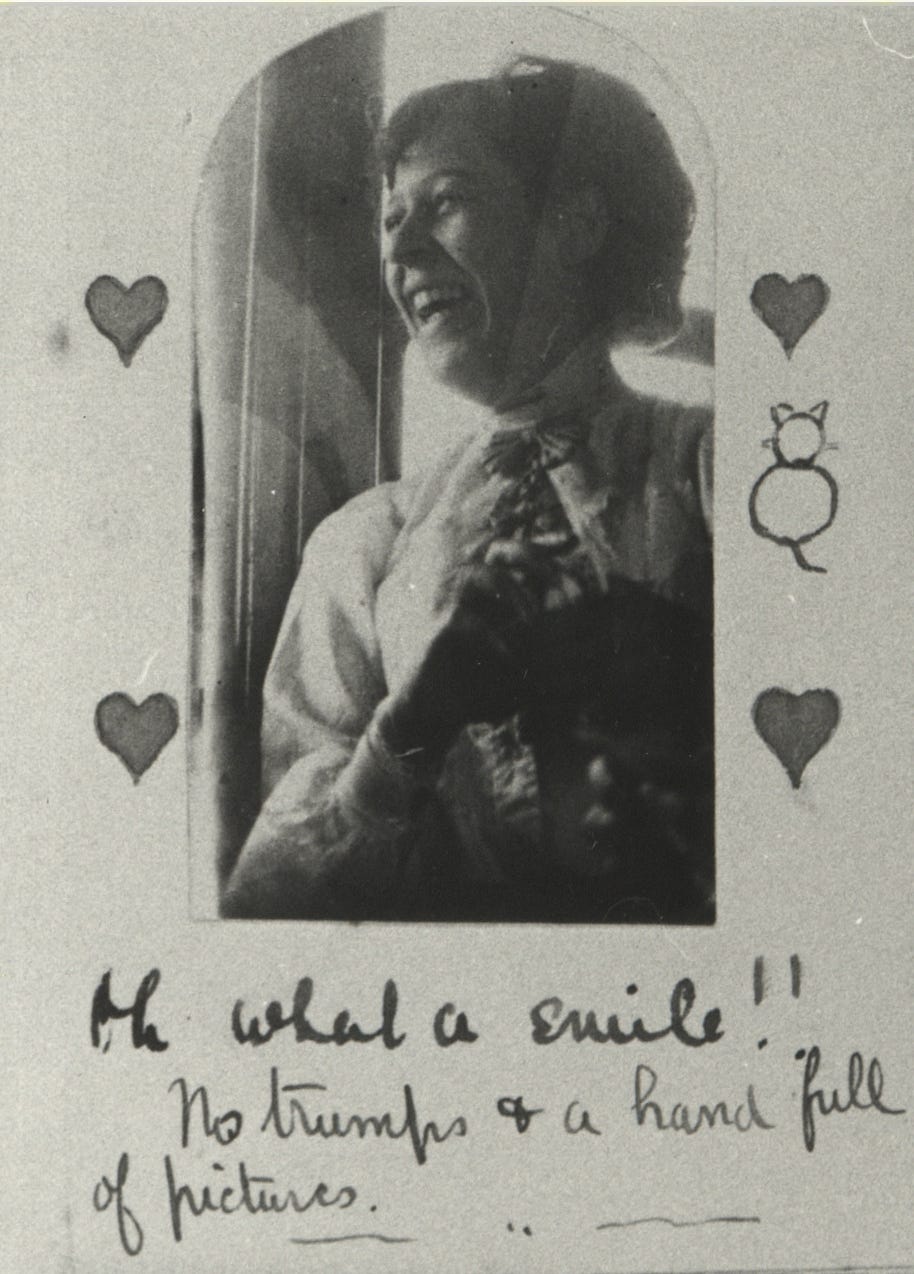
Over on my polar blog I recently published a lengthy recap of my research on Fanny Cohen (1887-1975), a fairly obscure Australian mathematician, scientist, and teacher.
I only know who she is because she attended the University of Sydney with a handful of my favorite polar people circa 1909-1910. The presence of a buxom Jewess in Edwardian snapshots also featuring assorted explorers sparked a kind of fannish self-insert excitement in me.
What I like about Antarctic explorers is how unrelatable they sometimes are, in their archaic Victorian masculinity and desire to live the kind of adventurous life that I, famously “not an outdoors person,” tend to avoid… but here was Fanny Cohen, well-born and well-educated, strong-willed, academic, funny, fashionable, someone who was as close to ME as anyone I’ve ever found in history, closer even than my own ancestors—who, at the time that Fanny was gallivanting around Australia’s Hunter Valley with her grad school friends, laughing and singing and flirting and rock-collecting, were (as far as I know) living lives of poverty and fear in the shtetls of the Pale of Settlement.
I don’t do history academically or professionally, at least not at the moment. I am an amateur in all the best senses of the term, which means I can spend a lot if not all of my research time on self-indulgent, quixotic ventures, like trying to establish a character portrait of Fanny Cohen that would prove we could’ve totally been best friends.
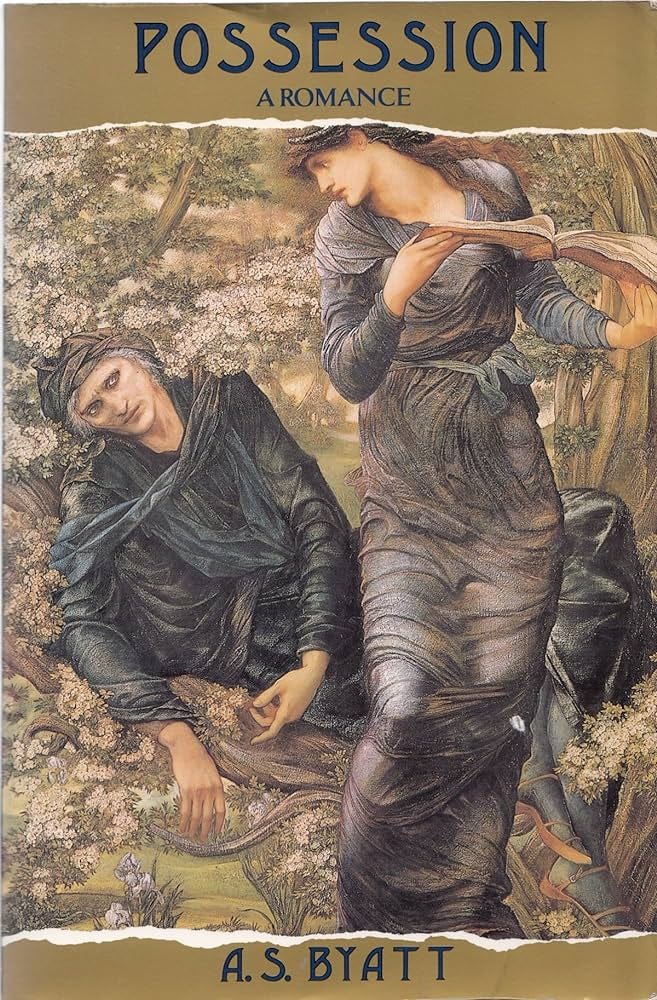
A.S. Byatt’s award-winning 1990 novel Possession is the best book ever written about doing archival biographical research. In the novel, contemporary researchers Roland Michell and Maud Bailey discover letters which reveal a brief but consequential relationship between prominent Victorian poets Randolph Henry Ash and Christabel LaMotte, until then unknown to scholars. The plot unfolds propulsively from there, peppered through with pastiches of period letters and poetry.
Not only does Possession accurately capture the breathless thrill of the research chase, the opening up of intoxicating possibilities of new retrospective understanding, it also centers on how the lives of researchers inevitably become intertwined with, and project themselves upon, the lives of their subjects; while in turn the lives of the subjects project forward through time to influence, against entropy and logic, the lives of their biographers. A dead poet is not so dead that they have no power; or rather, the biographer’s interest (a little like an observer in quantum mechanics) revitalizes a closed life, introduces new questions, reopens it up again so that it regains at least some of the power it had during life to love and be loved, to change others and to be changed. The titular possession goes both ways.
In the novel, Michell and Bailey do a lot of things that professional scholars are not supposed to do, like stealing letters from archives and digging up dead bodies. Their deepening identification with Ash and LaMotte, and the dead’s power to influence the romantic arc of the living, is cast alongside these no-no’s as a cautionary tale, one causing quite a bit of adultery… yet because this is a novel, and a romance at that, the reader is rooting for these meddling kids, and weeps at their eventual dual triumph, academic (they solve the mystery) and romantic (they get a happy-ever-after together).
When I read Harry Pennell’s love confessions in his diary for the first time, I remember thinking, This is my Possession moment. Every researcher secretly dreams of finding a smoking gun that will change everything. Some kind of confession: love, sex, murder, betrayal, adultery, a secret child, a hidden grudge. We want to charge that closed life up again with vitality; we want to be the ones to invoke that retroactive reassessment, we want to possess and be possessed.
Well, maybe not every researcher—academic scholars may well have had that desire drilled out of them long ago, but us amateurs have no such compunctions in voicing that desire, especially those of us who are also fiction writers. Because Byatt’s novel is specifically a novelist’s fantasy about historical research, infusing a dry process with a romance which, at its best, it actually does have the potential to have, in my experience—though perhaps not reaching to the soaring heights of the research done in the book.
“Coherence and closure are deep human desires that are presently unfashionable. But they are always both frightening and enchantingly desirable,” wrote Byatt in Possession. The self-indulgence of looking for a friend or lover in the archive, of searching out a coherent story with a happy and/or sensical ending—it is not very professional, or realistic, or even advisable. I’m not planning on writing a novel about Fanny, but approaching research as if I were is intoxicatingly fun.
Hilary Mantel, queen of the historical novel, long may her memory live, had much to say on this aspect of speculation. “I think novelists are alert for everything historians can find and verify, but then for something different, and extra; history’s unconscious, if you like,” she said. “To a degree, historians have to believe that people meant what they said and said what they meant, and that their actions can be interpreted by the logic of their lives and times. But fiction redirects us to mystery and chance, and doesn’t assume that people know their own minds or hearts.”
There’s also an aspect of research-as-entertainment, which was not really possible when Mantel was writing her first historical novel, A Place of Greater Safety, in the 1970s:
I started it when I was twenty-two, a year after university. That would be 1974. I wrote it in the evenings and on weekends. I did more of the research up front than I would have done at a later stage—luckily for me, because in spring of ’77, we went to live in Botswana, where there were no sources to speak of, as you can imagine. I had an intense few weeks before we went, when I said to myself, Get everything you haven’t got, because this is your only chance.
Ok, ignoring that she wrote it in her early 20s because that makes me want to die, think of how easy we have it now! For Mantel to become possessed by Georges Danton (who gets some of the most gloriously horny character descriptions I’ve had the pleasure to read in a historical novel) and his French Revolution compatriots, she had to sit at a desk in a certain library in a certain city. I can get possessed by opening a new tab, or emailing an archivist on the other side of the world; that romantical drug, history, is only ever a click away.
I’ve been meaning to read Possession forever, so I’m going to take stumbling across this post as a sign to do that! Also Fanny Cohen sounds like such a fascinating figure and definitely the sort of historical figure that would lead me down the rabbit hole, too